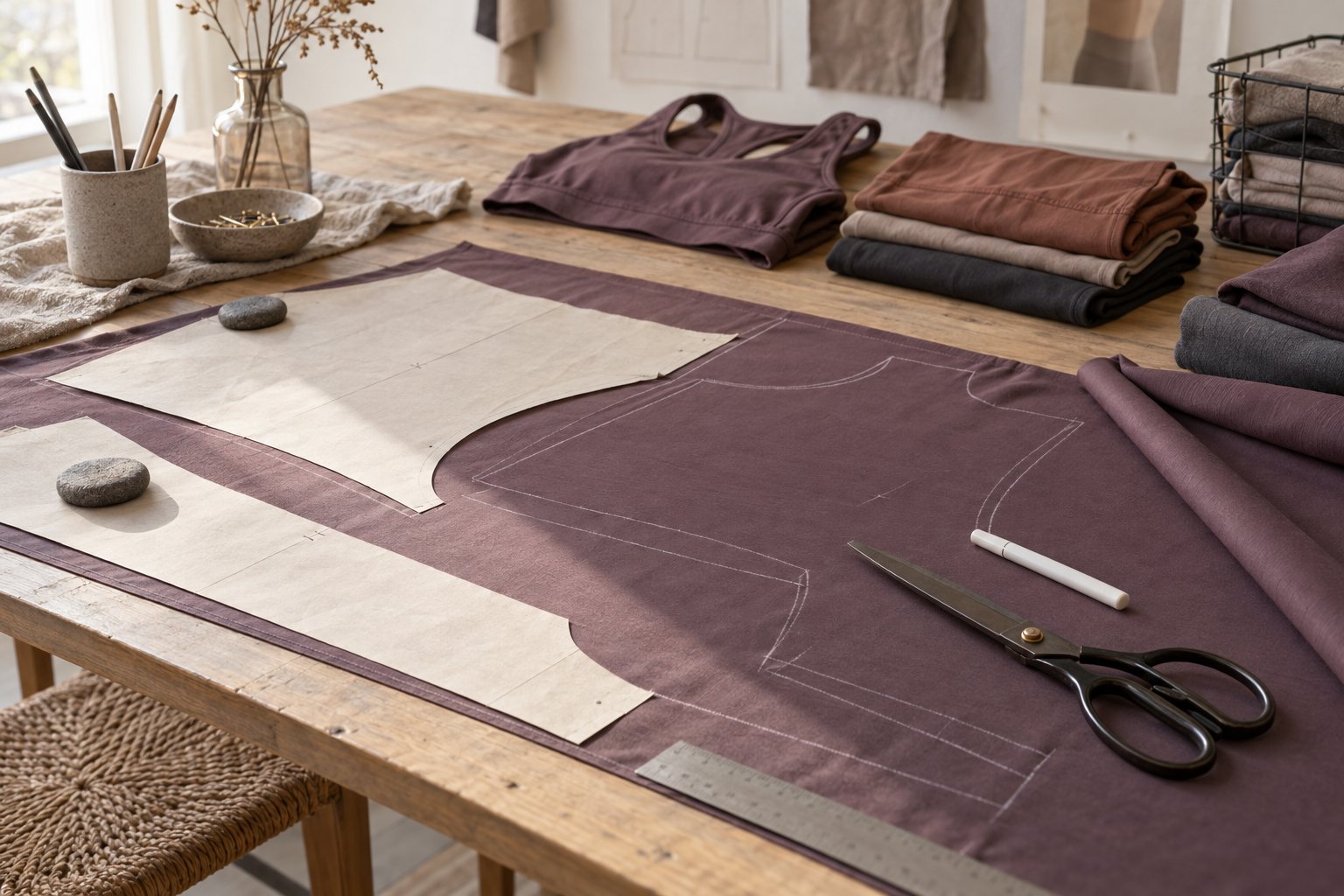
The process in one view
Every program follows the same backbone, whether it is three leggings for a studio or a full collection for a new brand. What changes is how many loops the sampling stage takes and which route each style runs on. The ledger below shows the stages and who owns each decision.
| Stage | Main output | Decided by |
|---|---|---|
| Brief | Styles, quantities, target dates, route proposal | Buyer with the desk |
| Tech pack | Measurements, tolerances, construction, trims | Buyer, reviewed by the desk and factory |
| Fabric sheet | Composition, GSM, finish, tests, colors | Mill and factory, approved by buyer |
| Sampling and fit | Approved sample per style | Buyer |
| Written confirmation | Order terms, quantities, ship date | Buyer and factory, coordinated by the desk |
| Bulk production | Finished goods | Factory |
| Inspection and packing | Inspection report, packed cartons | Factory and inspector |
| Shipping | Goods in transit under agreed terms | Per delivery terms |
1. Brief
A brief is a short document: reference images, the practice or customer, quantity per style, colors, branding and the date the goods must arrive. From it the desk proposes a route for each style and flags anything that will push the MOQ or the calendar, such as a custom fabric or a new cup shape.
2. Tech pack
The tech pack is the contract for the garment. It carries a flat sketch, a measurement chart with tolerances for each point of measure, seam types, waistband construction, gusset shape, pocket placement, label positions and trims. Factories can sample from photos, but the result is a guess. Our guide on how to write a yoga apparel tech pack lists the fields that save the most time.
3. Fabric sheet
For cut and sew, the fabric sheet records composition, base and finished GSM with tolerance, knit structure, finish, color standards and the tests the buyer wants. For seamless, the equivalent is a yarn and knit specification. The sheet is approved before the first sample, so fit comments are not mixed up with fabric arguments. See the fabric library for typical ranges.
4. Sampling
The first sample typically takes 7-15 days once fabric and spec are agreed. It is made in the actual fabric where possible, or a close substitute that is named in writing. Sample charges and whether they are credited against bulk are set per program and confirmed in writing.
5. Fit rounds
The buyer tries the sample on a fit model and returns written comments with measurements. Each round of changes adds sampling time, so we suggest collecting all comments in one document rather than sending them piecemeal. Opacity is reviewed at this stage in a deep squat on the lightest color. Read more in the yoga apparel sampling process.
6. Written confirmation
Before any bulk fabric is dyed, the order is confirmed in writing: styles, colors, size breakdown, unit price, labels, packaging, inspection level, delivery terms and ship date. The approved sample is sealed as the reference. Nothing moves to bulk on a verbal agreement.
7. Bulk production, route by route
Cut and sew
- Fabric knitting and dyeing - the mill knits or draws greige fabric and dyes it to the approved color standard.
- Incoming fabric check - weight, width, shade and visible defects are checked before cutting.
- Cutting - panels are cut from a marker, with shade lots kept together so a garment does not mix lots.
- Sewing - flatlock or coverstitch seams, waistband attachment, gussets, pockets, bonded edges.
- Trims and branding - heat transfer or silicone logos, labels and any pads or elastic.
Seamless
- Yarn dyeing - yarn is dyed to the approved color before knitting.
- Knitting - each piece is knitted on electronic circular seamless knitting machines from the approved program.
- Linking and finishing - the knitted tube is closed, shaped and, where needed, joined at a small number of points.
- Setting - pieces are steamed or heat set so dimensions settle before measurement.
- Trims and branding - logos and labels applied after setting.
Bulk production typically takes 30-45 days after sample approval and fabric availability, confirmed in writing per program. The full planning picture is on MOQ and lead time.
8. Inspection
In-line checks during sewing or knitting catch problems while they can still be corrected. A final random inspection is carried out on finished, packed goods to the AQL level agreed for the order. The buyer receives a report with photos, measurements and the defect count. Details are on the quality control page.
9. Packing
Garments are folded, size-stickered and polybagged as specified, with hang tags attached if ordered. Cartons are marked with style, color, size breakdown and carton number. A packing list is issued that matches the cartons.
10. Shipping
Shipping documents, such as the commercial invoice, packing list and any test reports required at import, are prepared from the confirmed order so the paperwork matches the cartons. Goods leave under the delivery terms agreed in writing. Transit time depends on the shipping method and destination. If a program uses both routes, cartons from the two clusters can be consolidated before export where the terms require it.
Small batches follow the same steps
A small first order is not a shortcut through the process. It runs through the same brief, tech pack, sample and written confirmation, at the lower end of the MOQ range for its route. Our note on small-batch yoga apparel production covers how to keep a short run efficient.
When your references are ready, send the brief and we will reply with a route per style and a sampling plan.