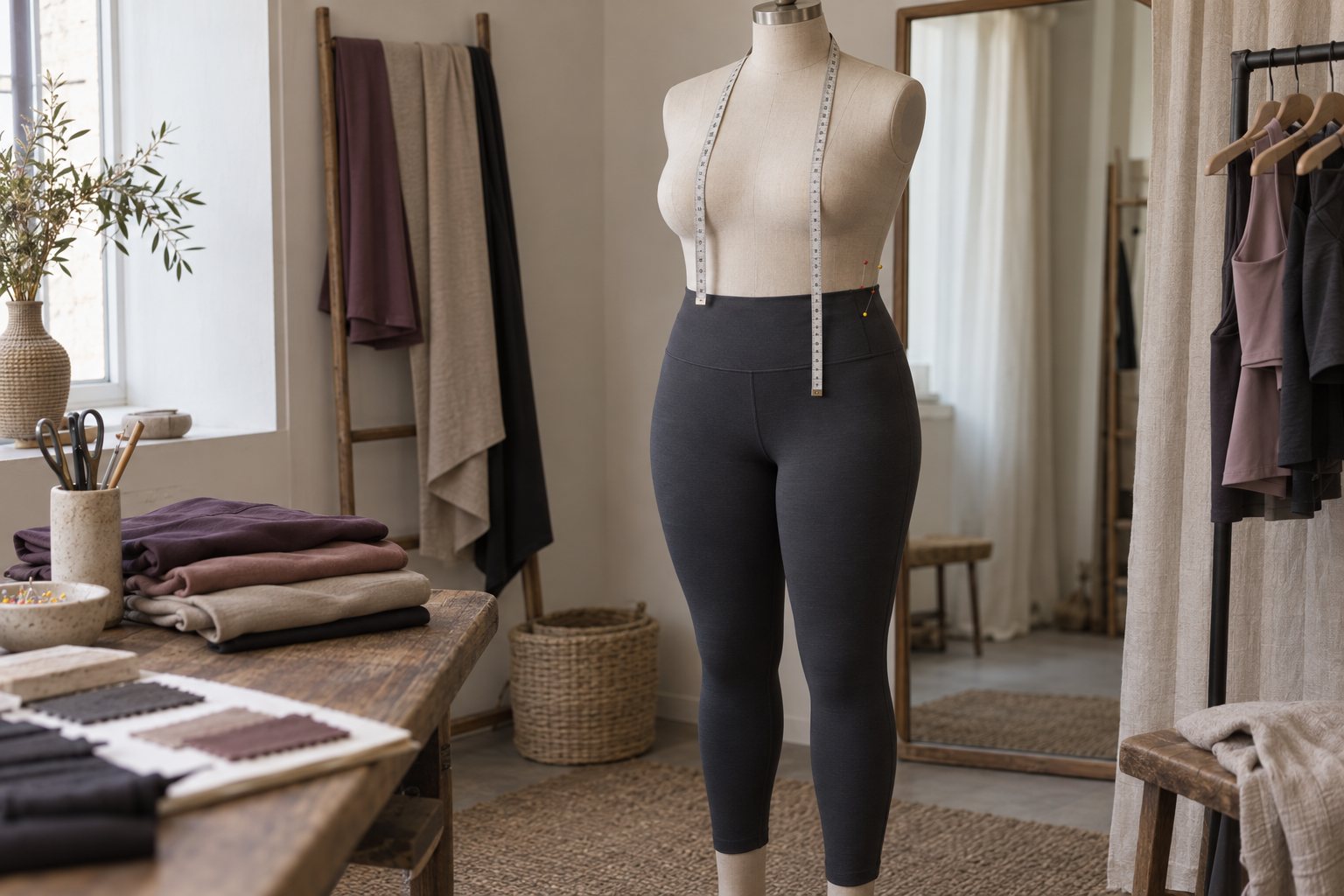
Why plus size needs its own fit process
Many brands extend a size chart by adding larger sizes to an existing grade. The result is a legging where the waistband rolls, the rise is too short at the back, the thigh is tight while the calf is loose, and the seat goes sheer. These problems come from the same cause: bodies do not scale evenly, and a grade built on a straight-size fit model stretches the wrong measurements as sizes increase.
A plus size yoga wear program starts with a separate base size and a plus fit model. The desk helps you set that up, and the partner factory develops the plus pattern alongside, not after, the straight-size pattern.
Size range and labeling
Plus ranges are labeled in different ways. A common labeling is 1X-3X, sometimes extended further, while other brands continue the letter run or use numeric sizes. The label matters less than the measurement table behind it. Publish waist, hip and inseam figures for each size so the customer can choose with confidence, and keep the labeling consistent across leggings, bras and tops.
Decide whether plus is a separate range with its own patterns, or an extension of a single size chart with a break in the grade. A separate range usually fits better; an extended chart is simpler to stock. Both are workable if the fit is developed on the right bodies. Our size chart and grading note explains how grade breaks work.
Plus fit development ledger
| Area | Common issue | What to specify |
|---|---|---|
| Waistband | Rolls down or digs in | Wider band, firmer elastic or double layer; height confirmed on tech pack |
| Back rise | Pulls down when bending | Longer back rise and contoured back seam in the plus pattern |
| Inner thigh | Abrasion, pilling, holes | Durable fabric, pilling tests, gusset, seam placement away from friction |
| Seat opacity | Sheer under stretch | Higher GSM, opacity review on the plus sample in every color |
| Calf and ankle | Too loose or too tight | Grade the calf separately from the thigh |
| Bra support | Straps cut in, underband rides up | Wider straps and underband, medium support construction |
Fit models and grading
The plus base size should be fitted on a real person who matches your target customer, not on a dress form alone. Fit the sample standing, in a deep squat, in a forward fold and seated. Ideally check one size above and below the base on additional bodies, because plus grading spreads wider than straight sizes and errors grow quickly at the ends of the range.
Grade rules for plus are rarely linear. The hip and thigh may grow faster than the waist, the rise needs more length at the back, and the inseam often stays similar across sizes. Write each grade step into the tech pack with tolerances. The plus size fit development note walks through a practical sequence.
Waistband width and rise
A narrow waistband on a plus legging tends to roll and cut in. Most plus programs move to a wider high-rise waistband, often a 3-layer construction, with a reference height in the 4-6 in range confirmed on the tech pack. A fold-over band without a hard elastic can feel softer, but it needs enough negative ease and a firm enough fabric to hold. Review the waistband after washing, because elastic recovery changes after laundering.
Inner thigh abrasion
Thigh rub is the most common durability complaint in plus leggings and shorts. Friction wears the surface into pills and eventually holes. The controls are a durable, tightly knitted fabric, a gusset that moves the crotch seams out of the friction zone, flatlock seams that lie flat, and pilling tests (ASTM D4970 or ISO 12945-2, or ASTM D3512 random tumble) on the bulk fabric. An anti-pilling finish can help. See pilling resistance in yoga pants for test details.
Fabric and opacity
Plus leggings stretch the fabric further at the seat and thigh, so a fabric that is opaque in a small can show through in a 2X. Choose weight with the plus sizes in mind. In nylon/spandex interlock the reference range is 230-280 GSM, with dark colors sometimes passing at 230-240 GSM and white and pastels often needing 280-300 GSM. A spandex share around 20-25% gives hold and recovery without feeling restrictive. Run the squat review on the plus sample in every color. The fabric library has the full reference ranges.
Bras and tops for plus
Plus bras need wider straps, a deeper and wider underband, and often medium support construction even for gentle practices. Letter sizes may not cover the range of bust sizes; some brands add band and cup sizes in the plus range. Tops need more armhole depth and body length in the grade, so hems stay down and armholes do not gape. See the sports bras page for support and cup choices.
Language and marketing
Describe plus garments by their features: fit, support, fabric and coverage. Avoid body-shaping claims, which are not appropriate for performance apparel and invite complaints. Product photography on plus models, with the size worn noted, helps customers choose and reduces returns.
MOQ, sampling and timeline
Plus sizes can usually be mixed within the color quantity of a style, which lets a brand test a plus range without a separate minimum. If plus uses its own pattern, the factory may treat it as a separate style with its own MOQ. Typical references are 100-300 pcs per style per color for cut and sew and 300-500 pcs for seamless, confirmed in writing for each program. Plan for an extra fit round on the plus base size. First samples typically take 7-15 days; bulk typically 30-45 days after sample approval. Send your plus brief with your size chart and fit notes.