Why there is no price list
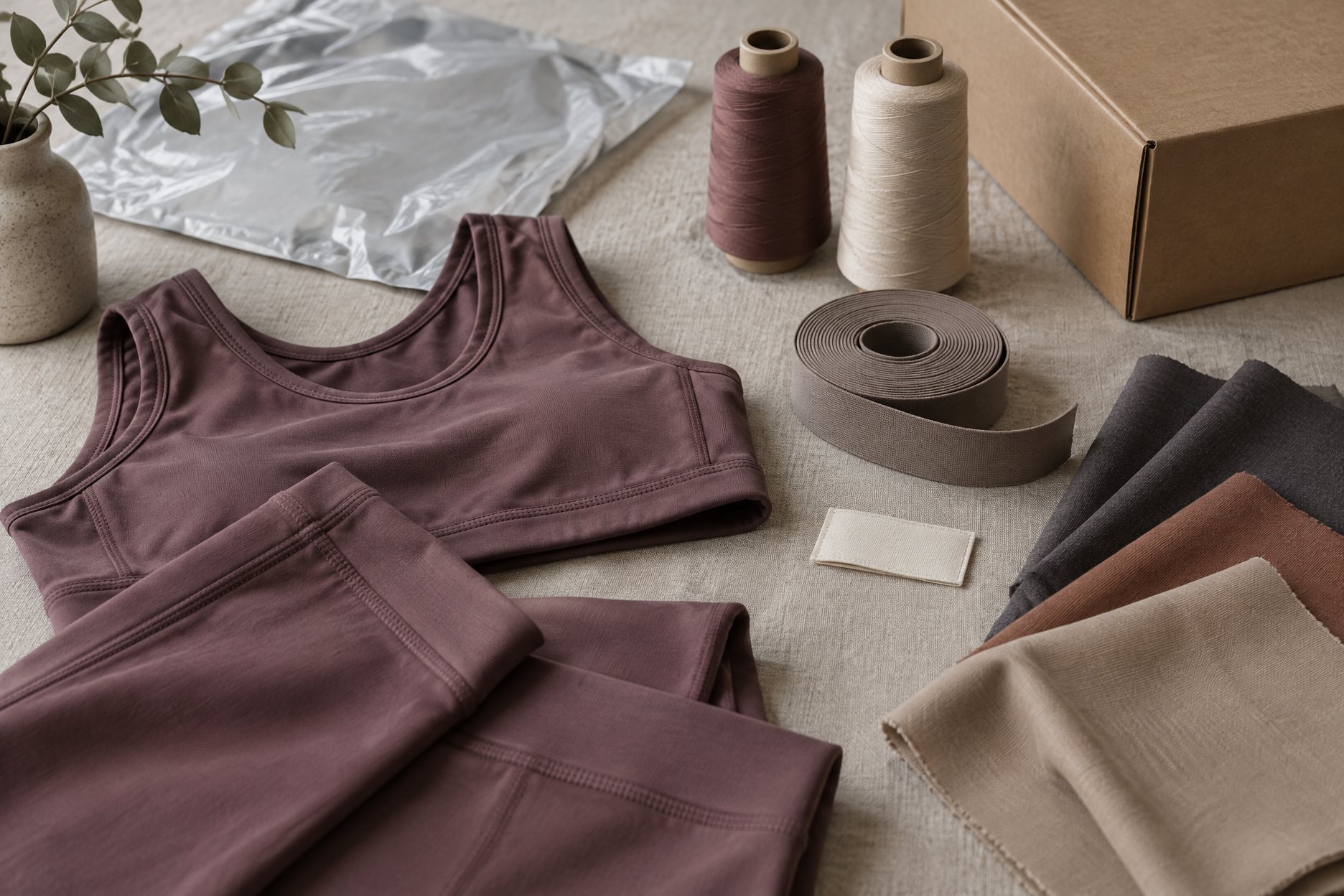
Two leggings that look alike in a photo can be made from different fabrics, with different waistbands, pockets and finishing, in quantities that differ by several times. Each of those choices changes the cost. A price list would either be wrong for most programs or hide the details that matter. That is why every unit price is quoted per program and confirmed in writing, and why this page explains cost drivers rather than numbers.
How the cost of a garment is built up
| Component | What it includes | Relative weight |
|---|---|---|
| Fabric | Yarn, knitting, dyeing, finishing, consumption per garment including waste | Usually the largest single share |
| Trims | Elastic, cups, labels, thread, zippers if any | Small to moderate; custom trims add more |
| Labor | Cutting, sewing or knitting, finishing operations | Rises with construction complexity |
| Washing and finishing | Setting, steaming, special finishes such as brushing | Depends on the finish |
| Branding | Logo application, woven labels, hang tags | Depends on method and quantity |
| Packaging | Polybags, size stickers, cartons, inserts | Small per piece, more for custom packs |
| Testing and inspection | Lab tests, pre-shipment inspection | Spread across the order quantity |
| Freight, duty, import costs | Shipping, customs duty, brokerage, local delivery | Depends on terms, method and destination |
Not every component appears on a factory quotation. Freight and duty, for example, depend on the delivery terms. That is why it matters which terms a quote is built on.
What changes the unit cost
Quantity
Setup work is spread across the order: marker making and line setup on cut and sew, knitting programs and machine changeover on seamless, and fabric dyeing minimums on both. Larger quantities per style and color spread that setup over more pieces. Near the bottom of the typical reference MOQ, 100-300 pcs per style per color for cut and sew and 300-500 pcs for seamless, the setup share per piece is higher. See MOQ and lead time.
Fabric
Fiber, weight and finish all move the fabric cost. Nylon/spandex generally costs more than polyester/spandex; a higher spandex share, a heavier weight or a brushed finish add to it; certified organic or recycled fabrics usually carry a premium and sometimes higher fabric minimums. Compare options on fabric comparisons.
Construction
Every operation adds labor: gussets, pockets, bonded edges, multi-layer waistbands, removable cups, color blocking. A plain legging and a legging with side pockets and a hidden waistband pocket are different jobs. Read pockets in yoga leggings for an example.
Branding and packaging
A heat transfer logo is usually flexible on quantity; custom jacquard elastic or a printed waistband tape has its own supplier minimum. Custom boxes and printed polybags add both cost and lead time. See private label options.
Keeping a program affordable
Affordable yoga apparel is mostly the result of focused decisions rather than low quality. Use an existing mill fabric in stock colors, limit the number of styles, keep construction purposeful, and choose branding methods without high minimums. Concentrating quantity on fewer style-color combinations usually does more for unit cost than any single negotiation.
Costs that sit outside the unit price
Some costs are easy to forget because they appear once rather than per piece. Sample charges, lab tests for a new fabric, a new mold for custom cups, a jacquard elastic setup or a custom hang tag print run are all program-level costs. They matter most on small first orders, where they are spread over fewer pieces. A good quotation lists them separately so you can see which ones recur on reorders and which do not. On a reorder of the same style, many of these one-off costs disappear, which is one reason reorders are usually easier to price than first orders.
FOB vs DDP
Delivery terms decide which costs sit in the unit price. Under FOB, the price covers the goods delivered onto the vessel at the port of export; the buyer arranges and pays for main freight, insurance, import duty and clearance. Under DDP, the seller delivers to the named destination with duty paid, so the price includes freight, duty and import formalities, and the buyer receives the goods ready for use. FOB gives the buyer more control and visibility; DDP is simpler but bundles costs. Our article on FOB vs DDP covers the trade-offs.
How to read a quotation
- Check the specification - fabric composition, weight, finish, construction details and sizes.
- Check the quantity basis - per style, per color, and whether sizes can be mixed.
- Check what is included - labels, hang tags, polybags, cartons, testing and inspection.
- Check the terms - FOB or DDP, named port or destination, and validity period.
- Check sample charges - and whether they are credited against bulk, confirmed in writing.
- Check the calendar - sampling typically 7-15 days, bulk typically 30-45 days after sample approval.
A quotation that leaves any of these open is not ready to approve. Ask for the gaps to be filled before paying a deposit. Our yoga wear cost breakdown walks through an example line by line.
Retail and wholesale pricing
Your selling price sits on top of landed cost: unit price plus freight, duty, warehousing, marketing and margin for the channel. Wholesale buyers need room for their own margin, so plan wholesale and retail price points together before fixing the specification. See pricing for wholesale and retail.
Request a quotation
Send reference styles, fabric preferences, quantities per style and color, branding and the delivery terms you prefer. The desk will return a quotation with the specification it is based on. Send a brief.