Why sets are their own category
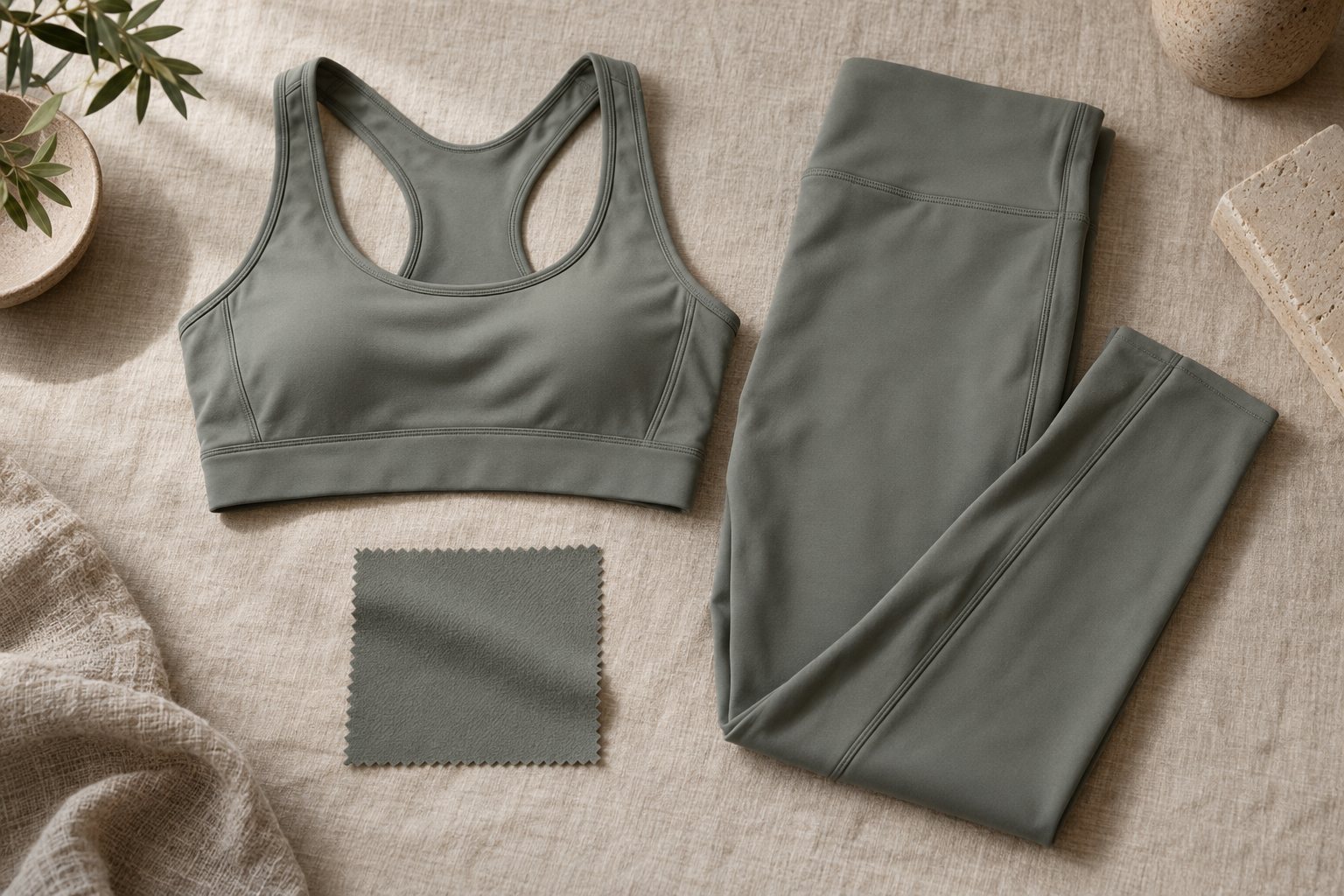
Buyers search for a women's yoga suit, a yoga suit set or a yoga clothes set because the customer wants a finished look in one purchase. For a brand, a set raises the average order and makes styling simple. For production, a set adds one hard requirement on top of two or three garments: the pieces must match in color, texture and handfeel when they are worn side by side under studio light.
The desk treats a set as one program with linked pieces. The bra, the legging or shorts, and the optional third piece share a fabric sheet, a color standard and an approval step, even when they are sewn on different lines.
2-piece and 3-piece formats
| Format | Typical pieces | Production notes |
|---|---|---|
| 2-piece classic | Sports bra + high-rise legging | The core set. Same shell fabric, same dye lot where possible. |
| 2-piece summer | Sports bra + bike shorts | Shorts use less fabric; MOQ still applies per piece. |
| 3-piece | Bra + legging + crop top, long sleeve or zip jacket | The third piece often uses a different fabric; match the color by lab dip. |
| Seamless ribbed set | Seamless bra + seamless legging or shorts | Knitted from the same yarn lot on the Yiwu route; texture must align. |
A 3-piece set with a jacket in a woven or a different knit raises the matching challenge, because different fibers and fabrics take dye differently. Ask for a lab dip of each fabric against the same color standard before bulk.
Color matching across pieces
Color mismatch is the most common set complaint, and it has three usual causes. First, pieces cut from different dye lots of the same fabric. Second, pieces made from different fabrics, such as an interlock legging and a ribbed bra, that take the same dye recipe differently. Third, seamless pieces knitted from yarn lots dyed at different times.
The controls are simple to write and need discipline to keep:
- Cut all pieces of one color from the same dye lot of fabric where the quantities allow it.
- Where different fabrics are used, approve a lab dip for each fabric against one physical color standard.
- On seamless sets, knit all pieces of one color from the same yarn lot.
- Check shade under daylight and store lighting at pre-production and at inspection, with the pieces laid side by side.
- Keep the approved swatch as the reference for reorders.
Our color control note for yoga sets covers shade bands and approval steps. Colorfastness tests such as AATCC 61 for laundering and AATCC 8 for crocking help keep a set matching after the customer has washed it a few times.
Seamless ribbed sets
The ribbed seamless set is one of the defining products of the Yiwu cluster. The bra and the legging are knitted as tubes on electronic circular seamless knitting machines, with ribbing, scrunch back detail and compression zones programmed into the knit. There are fewer seams, and the texture runs continuously around the body.
Two points need care. The rib direction and spacing should look consistent between the bra and the legging, which means both programs are written together. And because each style needs its own knitting program, seamless sets typically start at 300-500 pcs per style per color, confirmed in writing for each program. See seamless yoga wear for how the route works.
Cut and sew sets
Sets with pockets, prints, color blocking or removable bra pads usually go to a cut and sew partner in the Humen cluster. The bra and the legging share a fabric roll, which makes color matching easier when both are cut from the same lot. Cut and sew pieces typically start at 100-300 pcs per style per color, confirmed in writing for each program. A printed set should have the print scale and placement approved on both pieces, because a large print reads differently on a bra panel than on a leg.
MOQ per piece, not per set
Factories plan by style and color, so the MOQ applies to each piece separately. A 2-piece set in three colors is six style-color combinations, each with its own minimum. Sizes can usually be mixed within the color quantity.
This matters when the pieces sell at different rates. Many brands sell more leggings than bras, because customers buy a second legging to wear with a bra they already own. Plan quantities per piece from your sales data or a reasonable assumption rather than ordering equal numbers. Read MOQ and lead time for the reference ranges.
Set packaging and labeling
Sets can ship as separate pieces, each in its own polybag with its own size sticker, or as a packed set in one bag or box. Separate packing gives flexibility for size mixing, because a customer may need a medium bra and a large legging. Packed sets look better as gifts and in boutique displays but fix the size pairing.
Whatever you choose, each piece still needs its own care label with fiber content, country of origin and dealer identity for the US market. Hang tags, set cards and outer packaging are set per program. The private label page lists the branding options.
Planning a set program
- Define the pieces and fabrics - which pieces, which fabric for each, and whether the set is seamless or cut and sew.
- Set the color standard - one physical standard per color, used for every fabric in the set.
- Sample the set together - first samples typically take 7-15 days; review the pieces side by side.
- Confirm quantities per piece - written confirmation of MOQ, colors and size mix per piece.
- Bulk and inspection - bulk typically 30-45 days after sample approval; shade checked side by side at inspection.
When your set is defined, send the brief and the desk will propose a route and a sampling plan.