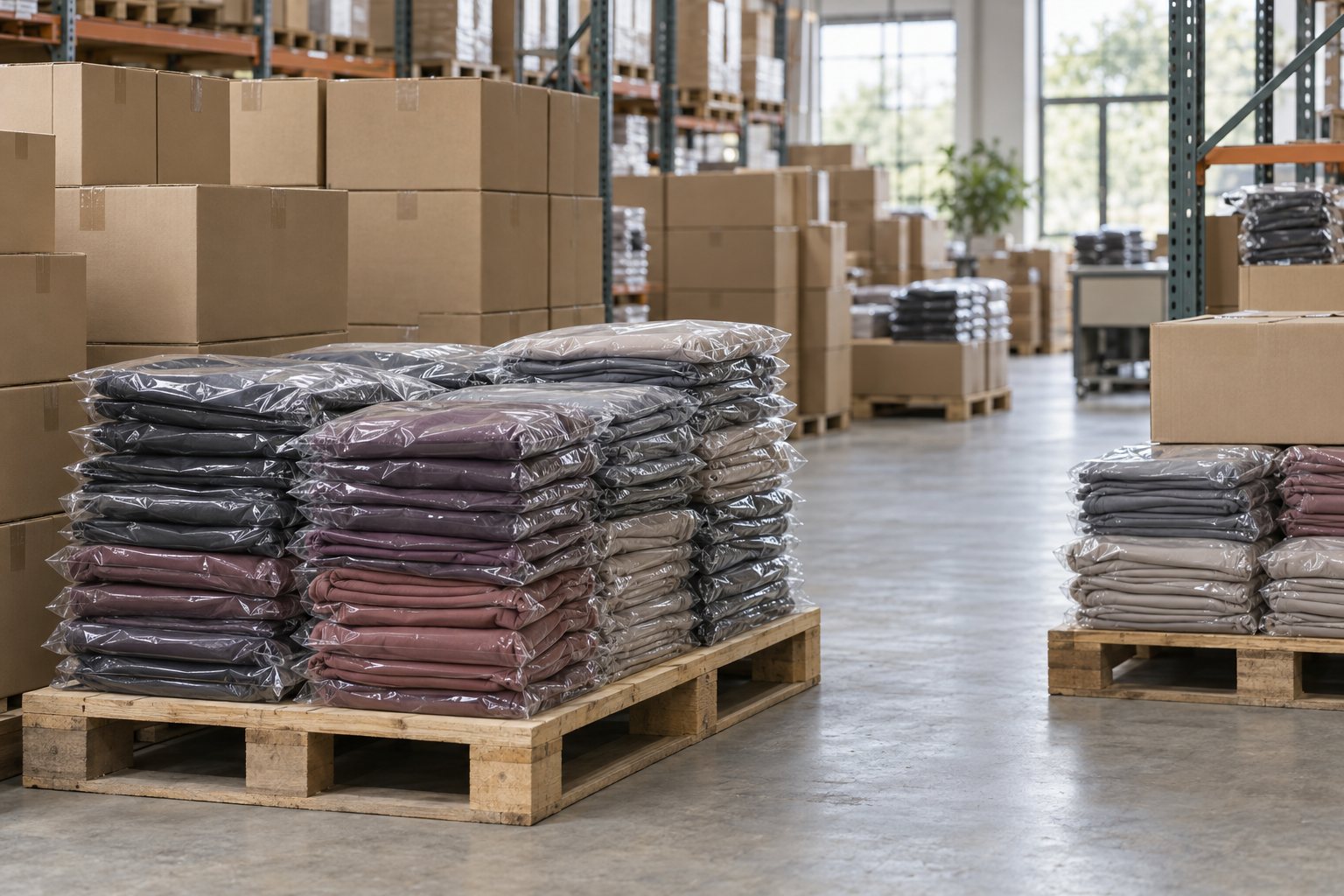
Who buys yoga apparel wholesale
Wholesale yoga clothes buyers come in several shapes. A boutique wants a small, well-chosen assortment that turns quickly. A studio wants a retail corner plus teacher uniforms. A distributor wants depth in proven styles and steady reorders. An e-commerce seller wants product that photographs well and ships without damage. Each needs a different balance of styles, sizes and packing, so the first step is to describe your channel clearly.
SutraKnit is a sourcing desk, not a warehouse or a factory. We coordinate wholesale programs with partner factories in the seamless and cut and sew clusters, and we check samples, labels and cartons before shipment.
Blank programs vs custom programs
Buyers often ask whether stock is available to buy immediately. Some partner factories run their own existing styles, sometimes called blanks, in their own fabrics and colors. Availability of those styles changes constantly and is never assumed; it is checked and confirmed in writing for each enquiry. A custom program, by contrast, is made to your specification from the start.
| Point | Existing factory style (blank) | Custom program |
|---|---|---|
| Design | Factory's existing pattern and fabric | Your design or adjusted reference |
| Branding | Your labels and tags added where possible | Full private label options |
| Colors | Factory's current colors | Your color plan, dyed to approval |
| Quantity | Depends on what is available; confirmed in writing | Typically 100-300 pcs (cut and sew) or 300-500 pcs (seamless) per style per color |
| Calendar | Depends on availability; confirmed in writing | Sampling typically 7-15 days, bulk typically 30-45 days after approval |
| Fits | Quick tests, new stores | Brands and distributors with a defined range |
All figures are typical reference ranges and are confirmed in writing for each program. See MOQ and lead time and private label.
Assortment by size ratio
Wholesale buyers rarely need the same quantity in every size. Sizes can usually be mixed within the per-color MOQ, so plan a size ratio that matches your sales history. Middle sizes typically carry more depth and outer sizes less. If you have no history, start with a balanced ratio and adjust on the reorder. A ratio written per style and color avoids confusion when the factory cuts or knits.
Prepacks
Some distributors prefer prepacks: a fixed size ratio packed together per color, so a store can order one pack and receive a full size run. Prepack contents are agreed before production and shown on the carton label.
Retail-ready labeling
For products sold in the United States, the label needs fiber content by percentage, country of origin and dealer identity such as an RN number, under the Textile Fiber Products Identification Act (16 CFR 303), and care instructions under the Care Labeling Rule (16 CFR 423). Retail-ready packing usually adds:
- A hang tag with style, color, size and your barcode.
- A size sticker on each polybag.
- Polybags with any warnings required in your market.
- Carton marks showing style, color, size breakdown and quantity.
Read US labeling rules for yoga apparel and packaging, labels and hang tags.
Cartons and packing
Carton planning affects freight cost and how easily goods move through your warehouse. Agree on the packing method, whether cartons are single-style single-color or mixed, and the carton marks before production. Distributors often want single-color cartons with a size breakdown printed on the side; boutiques may prefer mixed cartons that match a store order. Our guide to cartons, polybags and labels explains the options.
Reorders
Wholesale works when reorders are predictable. On a custom program, the pattern or knitting program, fabric and approved sample already exist, so reorders are simpler than first orders. Reorder quantities and lead times are also confirmed in writing, and they can be shorter when the fabric can be dyed from stock. Track sell-through by size and color, and place reorders early enough to cover bulk production and transit.
Payment and terms
Payment terms, deposits, balance timing, delivery terms such as FOB or DDP, and the treatment of samples are agreed per program and confirmed in writing before any deposit is paid. The written order states the specification, quantity by size and color, unit price, labels, packing and ship date. If a term is not in writing, treat it as not agreed. For delivery terms, see FOB vs DDP.
Quality before shipment
Wholesale goods go straight to customers, so problems found after arrival are costly. Inspection against the approved sample checks measurements, opacity, workmanship, labels and packing before goods leave the factory. See quality control.
For wholesale programs, agree in writing what happens if inspection finds a problem: whether goods are reworked, re-inspected or held, and how the ship date is adjusted. Clear rules agreed early save difficult conversations later, especially when your own customers are waiting for delivery.
Studio and boutique programs
Studios usually combine two needs: a small retail corner for students and a uniform for teachers and staff. Uniform pieces need consistent color across reorders and a size run that covers the whole team; retail pieces need a few styles that look good on a small rail. Boutiques often prefer a capsule of three or four styles that can be merchandised together and refreshed with one new color each season. In both cases, a short, reorderable core and a written size ratio do more for sell-through than a wide first order.
Distributors work at a different scale. They need stable specifications, consistent carton formats and reliable reorder calendars more than frequent new styles, so the written order and approved sample become the reference for every repeat shipment.
Start a wholesale enquiry
Tell the desk your channel, the categories you want, quantities per style and color, the size ratio, labeling needs and your target delivery date. Send a brief and the desk will reply with options and next steps.